HostFlow AI is an AI-powered guest concierge platform for hotels and short-term rentals. Guests scan a QR code in their room and instantly chat with a warm, 5-star digital concierge that answers property questions, recommends nearby places, and quietly alerts the host the moment something goes wrong, all without the host lifting a finger. Every property has its own knowledge base, branding, and quick-question menu, managed from a single admin dashboard.
- Instant answers to property questions, WiFi, AC guides, house rules, and a custom guidebook, with support for image-based visual instructions.
- Real-time nearby recommendations (food, coffee, pharmacies, hospitals) ranked by distance or quality via the Google Places API.
- Automatic emergency escalation: leaks, lockouts, or outages fire an instant severity-tagged Telegram alert to the host.
- Multi-agent AI pipeline built on Google's Agent Development Kit (ADK) with Gemini 2.5 Flash, orchestrating specialist sub-agents.
- Per-property branding, dynamic FAQ menus, and QR code generation from the admin portal.
- Serverless, containerized backend on Google Cloud Run with secrets managed in GCP Secret Manager.
- Live Appaihostflow.com
- RoleFull-stack & AI Engineer (end-to-end)
- PlatformWeb (Guest mobile + Host admin dashboard)
- StackNext.js, React, TypeScript, Tailwind CSS, Supabase (PostgreSQL), Python, FastAPI, Google ADK, Gemini 2.5 Flash, Google Places API, Telegram Bot API, Docker, Google Cloud Run, Vercel
Source Code
- Landinggithub.com/NyanLinHtutRain/HostFlowAi
- Guest & Admingithub.com/NyanLinHtutRain/guest-concierge
- AI Agentgithub.com/NyanLinHtutRain/hostflow-agent
Branding
HostFlow AI Logo & Wordmark
The Product
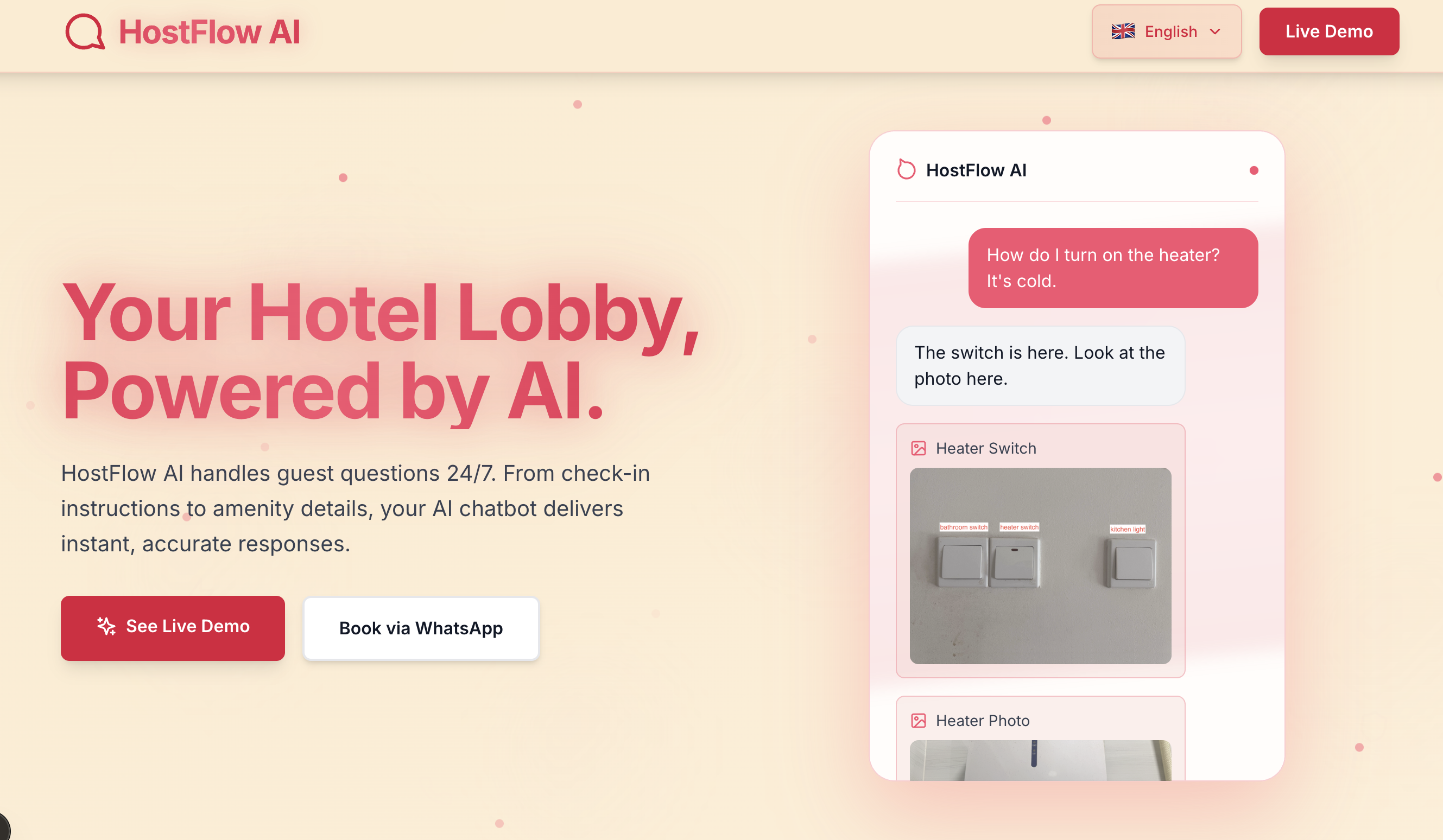
Landing page & live concierge demo, answering a guest with image-based instructions
Architecture
HostFlow AI is built as three cooperating services. A marketing landing page (Next.js on Vercel) drives sign-ups, a guest-facing chat and host admin portal (Next.js + Supabase on Vercel) manages properties and serves the concierge UI, and a Python AI agent backend (FastAPI on Google Cloud Run) runs the intelligence.
When a guest sends a message, the web app posts the room's context and the message to the agent backend. There, a Google ADK multi-agent pipeline takes over: a root orchestrator agent (Gemini 2.5 Flash) reads the property knowledge base and decides how to respond. It delegates local recommendations to a specialist Places agent backed by the Google Places API, and routes anything urgent to an Escalation agent that fires a severity-tagged Telegram alert straight to the host. Property data lives in Supabase (PostgreSQL), and the backend is Dockerized with CI/CD via Cloud Build, deployed to the asia-southeast1 region with API keys held in GCP Secret Manager.
- Landing site — Next.js, Tailwind, Framer Motion; multi-language marketing page on Vercel.
- Guest & Admin app — Next.js + Supabase; QR-based guest chat with per-property branding, plus a host dashboard to manage rooms, WiFi, rules, and FAQs.
- AI Agent backend — FastAPI + Google ADK on Cloud Run; a root concierge agent orchestrating Places and Escalation sub-agents.
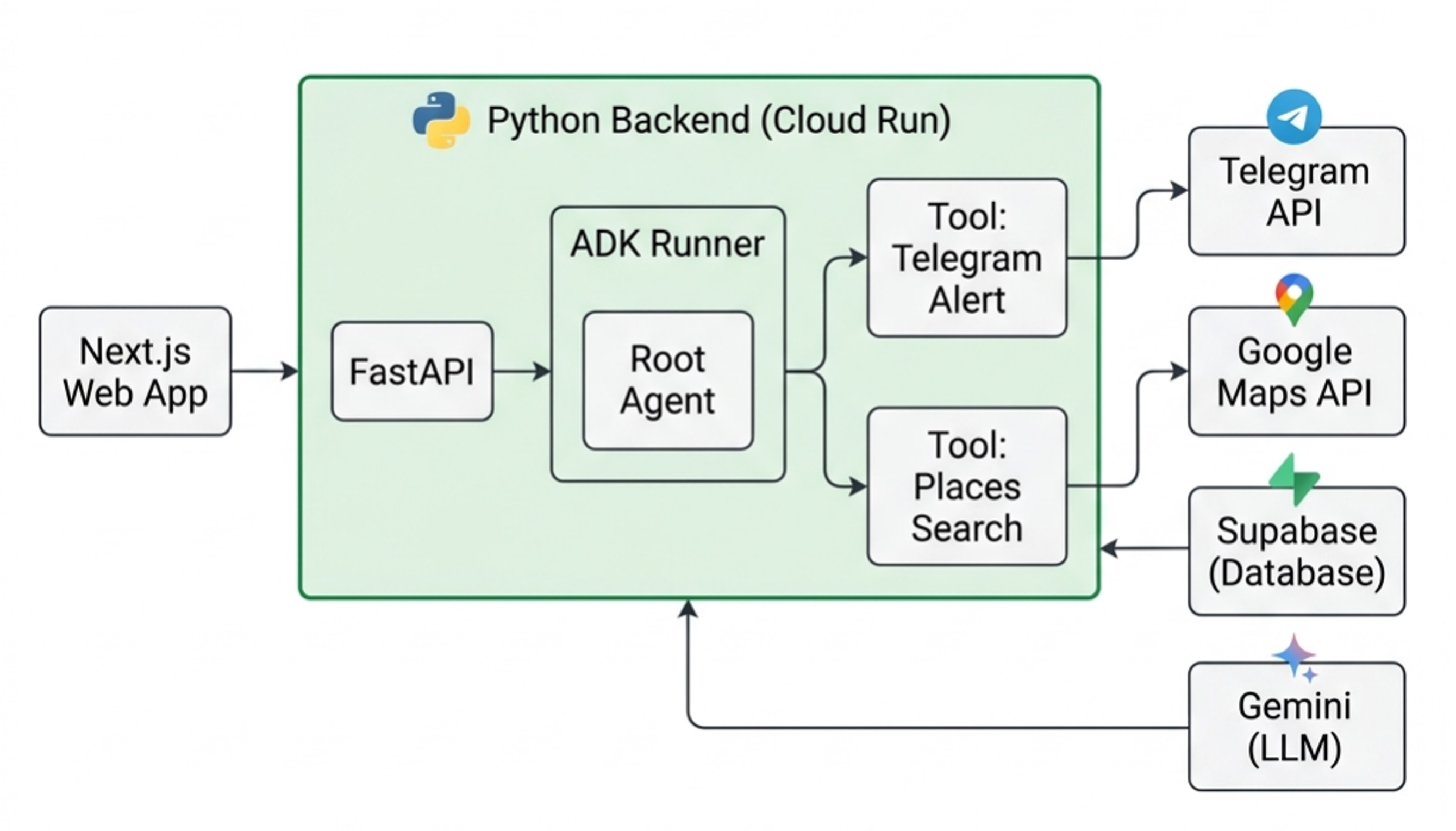
System architecture: Next.js web app → FastAPI + ADK Root Agent → Telegram Alert & Places Search tools, wired to Telegram, Google Maps, Supabase, and Gemini
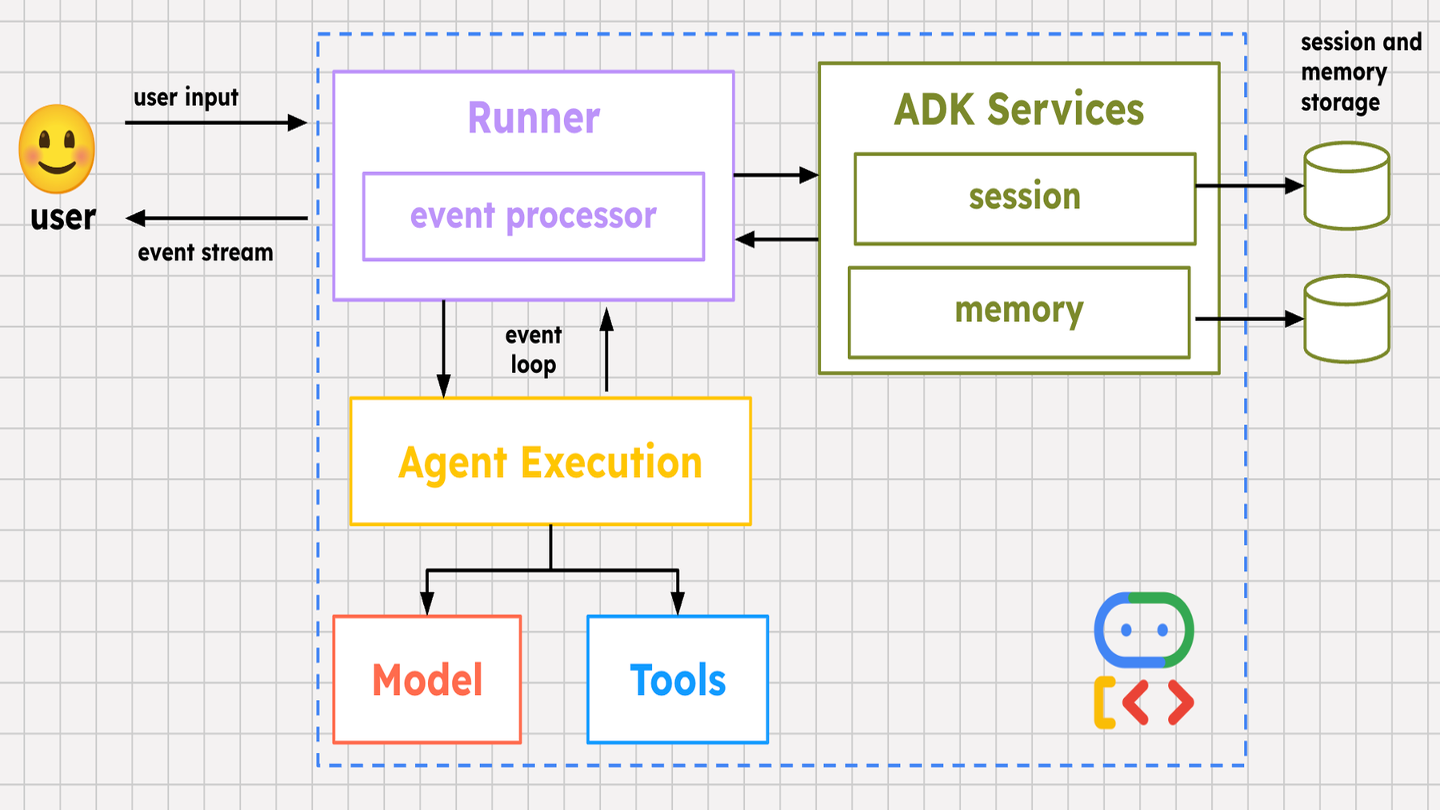
ADK agent runtime: the Runner's event loop drives agent execution across the model and tools, with session & memory services