I ran an online workshop for GDG Universiti Putra Malaysia's "Build with AI" program, held on May 10, 2026 and titled "Steering the Model: Workshop for Better AI Prompts". Ahead of a weekend hackathon, the goal was simple: get every attendee to stop just chatting with AI models and start actually steering them, so the prototypes they built that weekend would be reliable enough to demo. The session ran live online, ending with a fun knowledge quiz for the attendees.
- DateMay 10, 2026
- EventBuild with AI, organized by GDG Universiti Putra Malaysia
- WorkshopSteering the Model: Workshop for Better AI Prompts
- RoleWorkshop Facilitator
- FormatOnline, live via Google Meet
- TopicsPrompt Engineering, System vs. User Prompts, Chain of Thought, Few-Shot Prompting, Structured Output, Prompt Chaining, Temperature
The Workshop
Workshop Title Slide
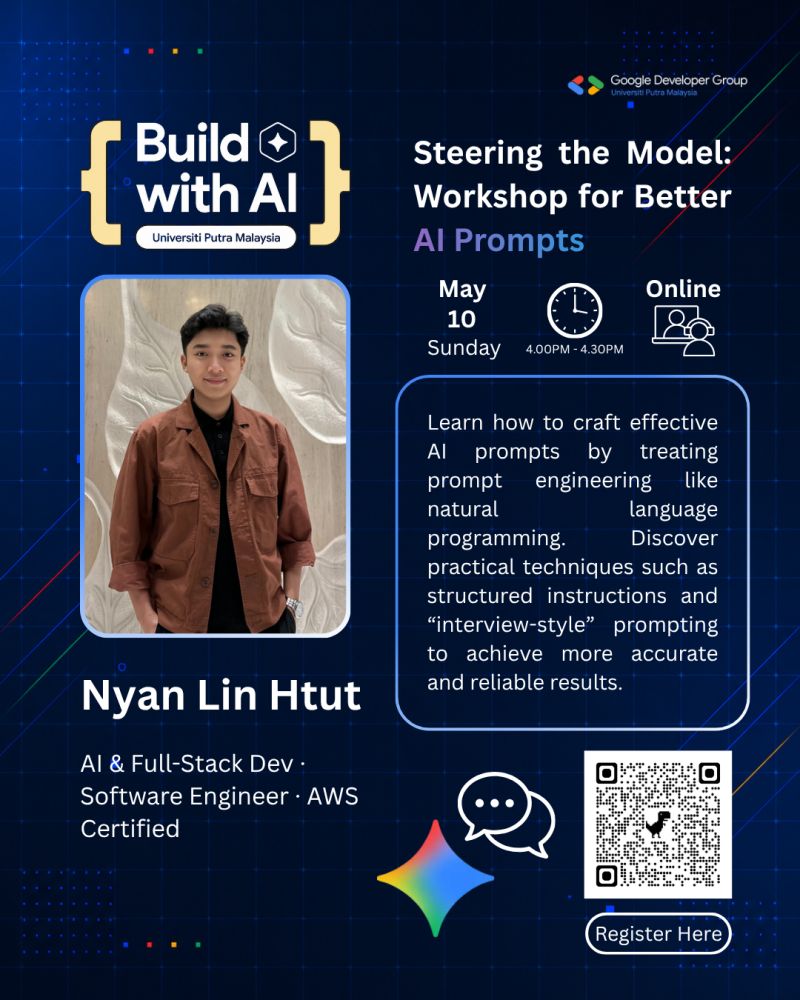
Official Workshop Announcement, GDG UPM
I opened by reframing prompt engineering as programming with words: instead of writing Python or JavaScript, you're steering an AI with plain-language instructions, and at their core these models are just text-prediction engines with no built-in task list, so it's entirely on you to define the role, format, and constraints. From there I walked through the main prompt types: direct/zero-shot for quick tasks, one- and few-shot prompting where you show the model an example pattern to copy, and Chain of Thought prompting, where you get the model to reason step by step instead of guessing the answer in one shot.
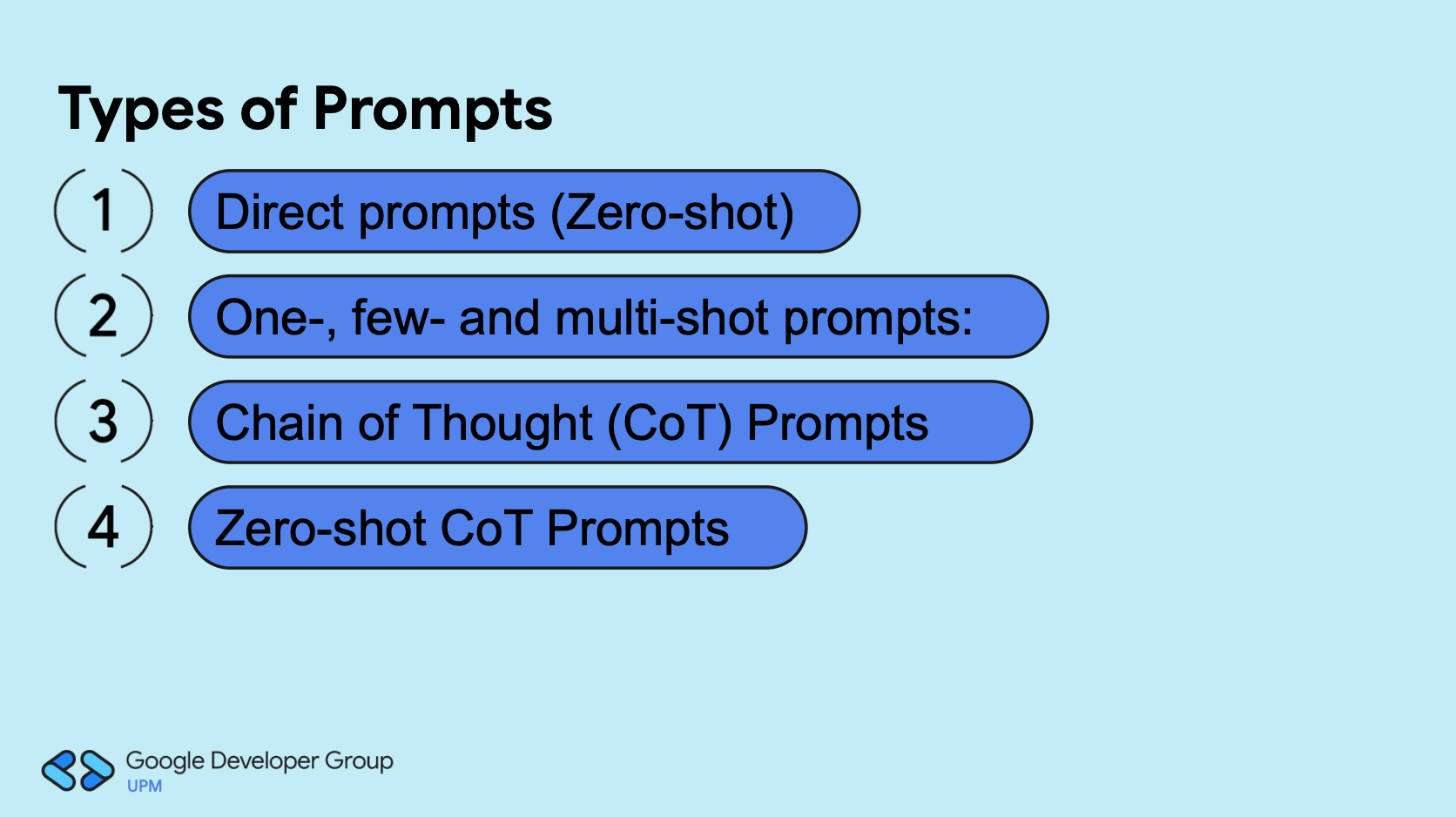
The four core prompt types: direct, few-shot, chain of thought, and zero-shot CoT
A key distinction I drew was system vs. user prompts: the system prompt as the always-on background rules that set the model's identity and behavior, versus the user prompt as the actual question typed into the chat. I demoed this live in Google AI Studio, then moved into the core theme of the session, steering vs. commanding: most people just issue a vague command and hope for the best, but steering means deliberately structuring the conversation to guide the AI's persona, tone, constraints, and reasoning, which is what actually produces reliable output for an app.
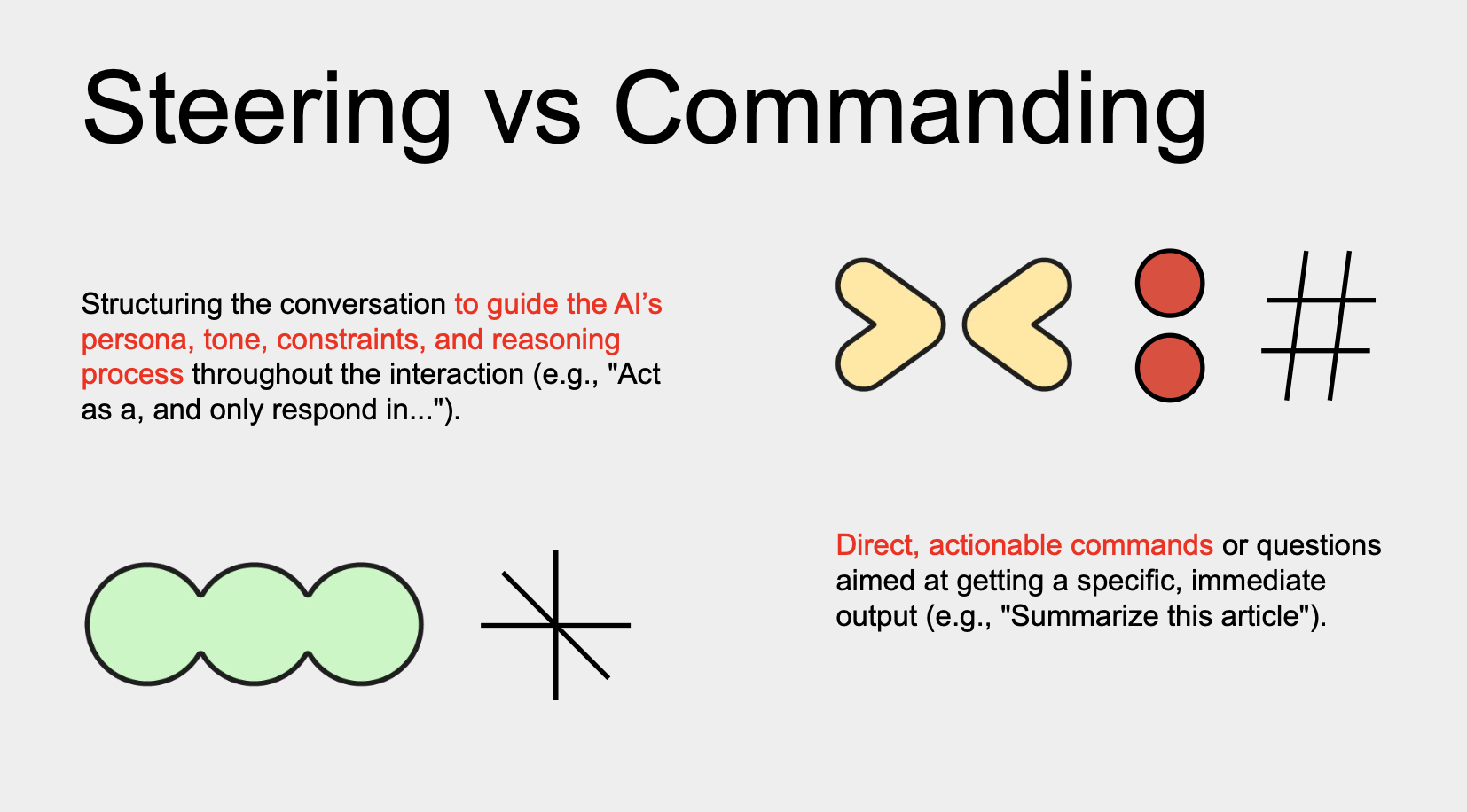
Steering vs. Commanding: structuring the conversation instead of issuing a vague, one-shot command
From there I covered the "Perfect Prompt" formula (role, task, audience, tone, format) and adding constraints, or negative instructions, since telling a model what not to do ("no slang," "do not include code") steers it far more reliably than only saying what you want. I then dug into few-shot prompting combined with structured output, showing how giving the model an exact JSON schema and an example pair locks it into producing clean, parseable data instead of chatty text that would crash a real application.
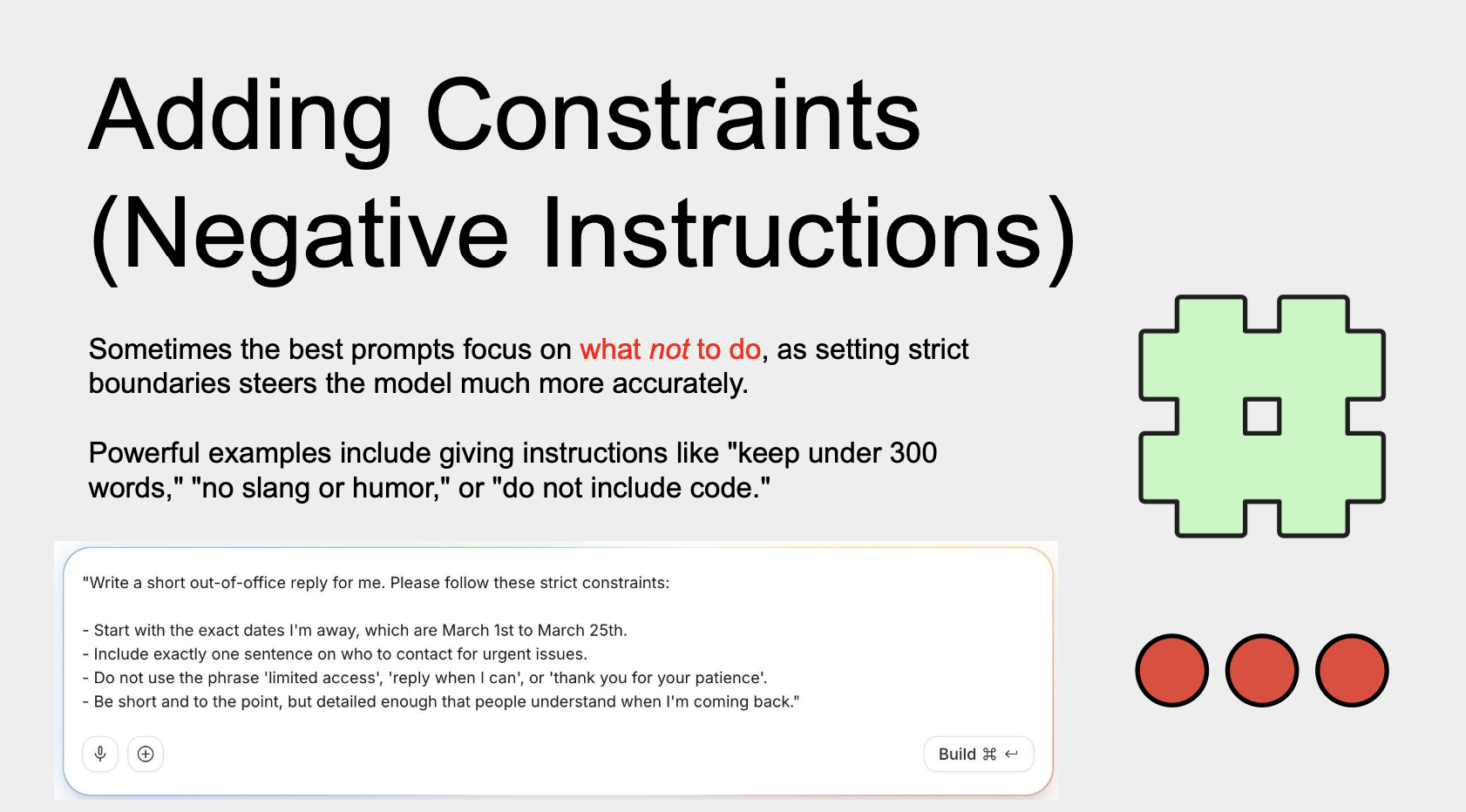
Adding Constraints: setting strict boundaries steers the model far more accurately than positive instructions alone
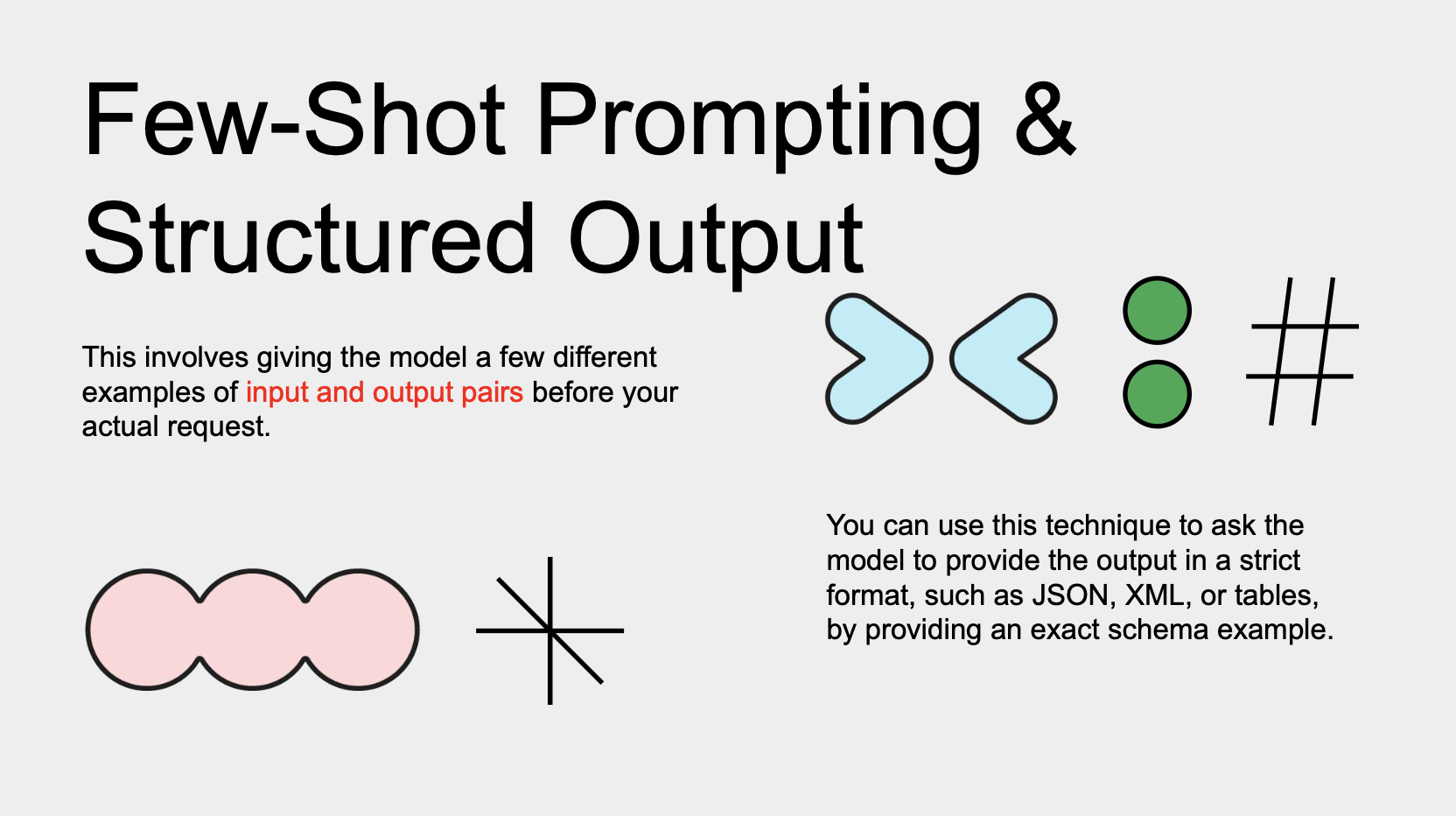
Few-Shot Prompting & Structured Output: locking the model into a strict, parseable JSON schema
The last stretch covered techniques for iterating once you have a first draft: prompt chaining (breaking a complex task into smaller steps and feeding each output into the next prompt, just like composing small functions instead of one giant script), iterative refinement (nudging a slightly-wrong output instead of starting the whole conversation over), and a favorite trick, the "Interview Style" prompt, where you hand the model your goal and let it interview you for missing details you didn't realize it needed. I closed with temperature: the dial that keeps output predictable and factual for code and strict JSON when turned low, or creative and varied for brainstorming when turned up, followed by a live quiz to check what stuck.
Photos
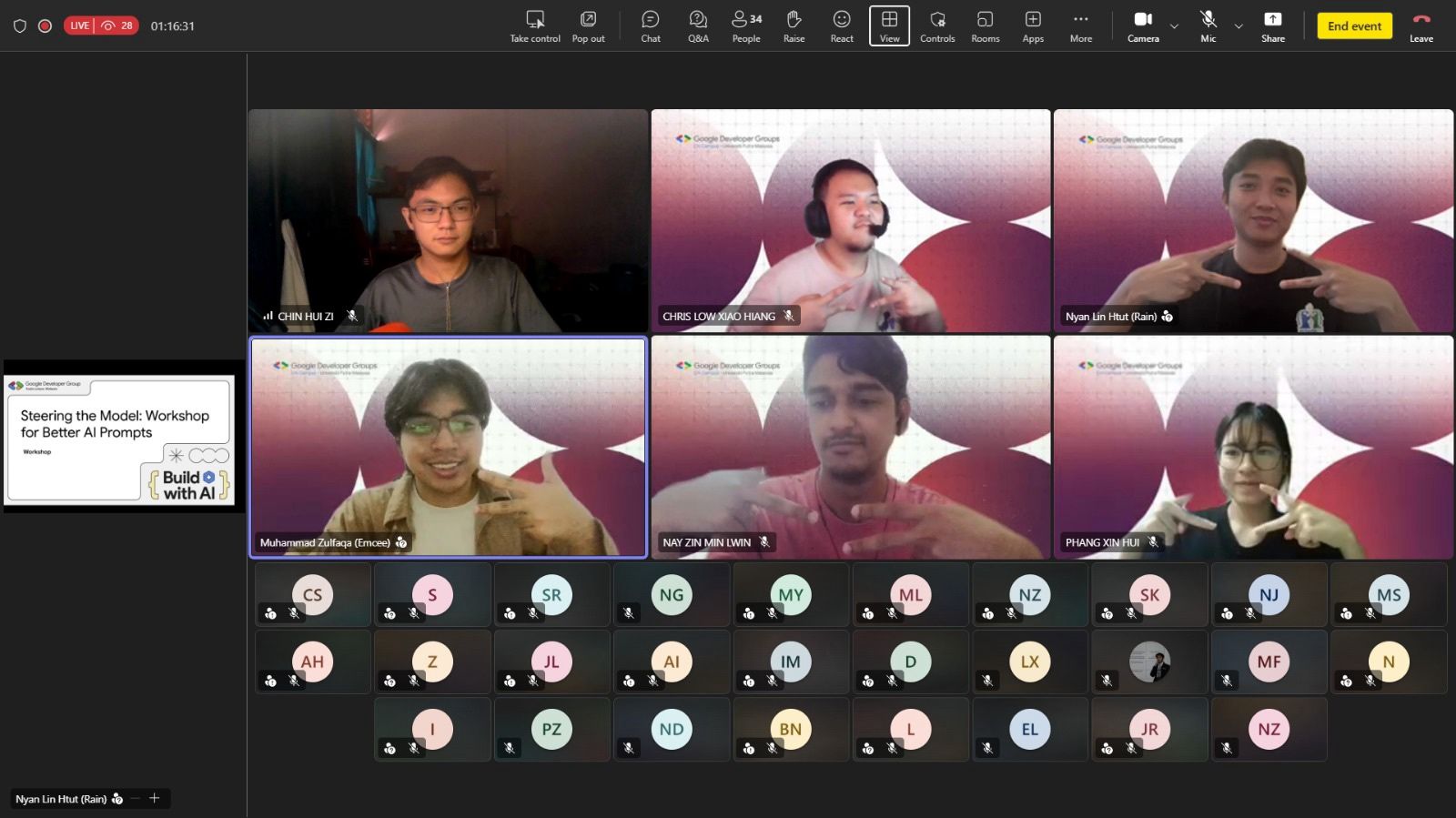
Live online with the GDG UPM organizers and attendees